The Hidden Reason Young Athletes Are Breaking Down - And It's Not Overtraining

Something is happening to youth athletes that nobody wants to talk about.
The kids training hardest are breaking down fastest. Not the kids who skip practice - the ones who show up every single day. The ones who do extra reps. The ones whose parents rearrange the entire family calendar around tournaments.
Stress fractures at 13. Tendon tears at 15. Chronic fatigue so deep that a kid who used to beg to stay late at practice now dreads Tuesday nights.
Doctors call it burnout. Coaches call it overtraining. Parents call it devastating.
But after spending two years talking to sports scientists, pediatric nutritionists, and the parents of young athletes who've watched their child fall apart - I'm convinced almost everyone is misdiagnosing the problem.
The training load isn't the issue. It never was.
The issue is what's happening inside the body before the athlete ever steps on the field.
The Numbers Don't Lie - And They're Alarming
Youth sports participation is at an all-time high. Training programs are more sophisticated than ever. And yet the injury rate keeps climbing.
That contradiction is the clue. If better training were the answer, better training would be working. It isn't.
Dr. Neeru Jayanthi, one of the country's leading researchers in youth sports medicine, put it plainly: the developing athlete's body operates in a completely different physiological environment than an adult's - and we keep making the mistake of treating it like a smaller adult body.
What's Actually Happening Inside a Developing Athlete
Between the ages of 10 and 18, the human body is undergoing the most complex biological construction project of a lifetime. Bone density is being laid down. Growth plates are still open. Muscle tissue is developing. Connective tissue is growing to keep pace with skeletal changes.
This process demands enormous nutritional resources. More than most adults need. Far more than most young athletes actually consume.
Now add competitive athletics on top of that. Two-a-day practices. Year-round sport specialization. Weekend tournaments. The body is burning through protein for muscle repair, calcium for bone remodeling, magnesium for sleep and nerve function, iron for oxygen delivery, and antioxidants to manage inflammation.
Sports science has a name for what happens when energy and nutrient intake can't meet that combined demand: Relative Energy Deficiency in Sport, or RED-S. The symptoms read exactly like what parents describe when their kid "hits a wall" - persistent fatigue, irritability, declining performance, sleep problems, frequent illness, and an elevated risk of injury that no amount of stretching or rest seems to fix.
Because you can't stretch your way out of a nutrient deficit.
The Diet Problem Nobody Wants to Admit
A 14-year-old playing 90 minutes of competitive soccer may burn 700–900 calories during the match alone - plus everything their still-growing body needs just to develop normally. Most parents I talked to described the same thing: school lunch, a granola bar before practice, dinner after.
The kids eating "well" by normal family standards are often still nowhere close to meeting the nutrient demands their body is making.
And here's what makes it invisible: there's no alarm. The body compensates quietly - stripping resources from lower-priority processes (immune function, joint health, sleep quality) to keep the muscles moving. For months, sometimes years, the athlete keeps performing while the foundation slowly erodes.
The breakdown wasn't sudden. It was building for months.
The Five Nutrients Every Young Athlete Is Running Short On
Five deficiencies show up again and again in athletes who experience chronic fatigue, elevated injury rates, and early burnout:
Developing athletes need significantly more per pound of bodyweight than adult recreational exercisers - and most fall short in the 30–45 minute post-training window when it matters most.
Critical for muscle function, nerve transmission, and sleep quality. Heavily depleted by sweat. Deficiency produces the exact symptoms most parents blame on overtraining: cramps, fatigue, poor sleep, anxiety before competition.
Delivers oxygen to working muscles. Iron-deficiency is common in adolescent athletes and presents as unexplained fatigue and declining performance.
Year-round competition chronically elevates cortisol. Sustained high cortisol breaks down muscle tissue, impairs recovery, and drives emotional burnout. Ashwagandha has been clinically studied for its ability to blunt this response in athletes.
Training generates oxidative stress. Without adequate antioxidant support, inflammation from daily training accumulates - narrowing the recovery window and creating the conditions for overuse injuries.
What Thread Performance Built - and Why It's Different
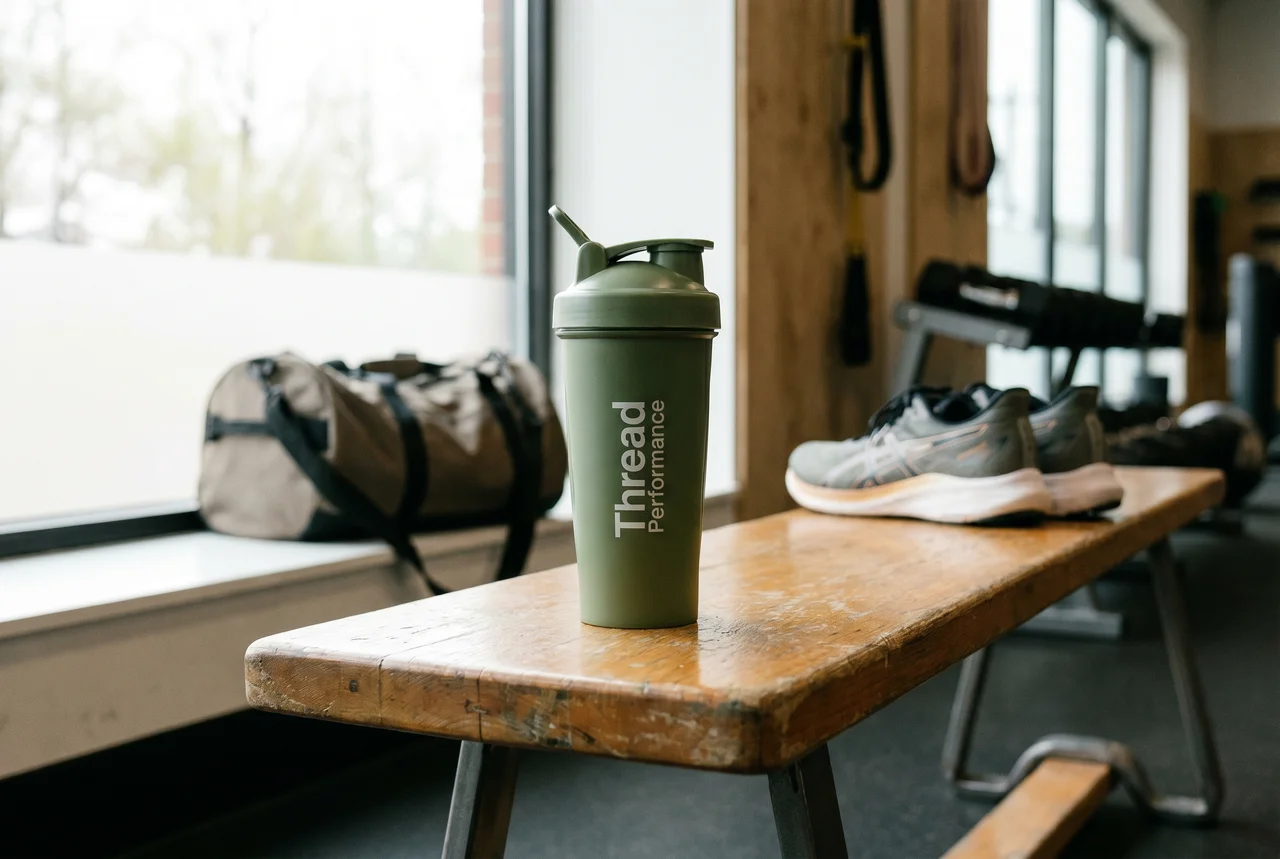
Most sports nutrition products are built for one of two audiences: elite adult athletes or general fitness consumers. A company called Thread Performance started from a different question: what does a body between 10 and 22 actually need to train hard, develop fully, and recover properly?
The result is Daily Fuel - an all-in-one nutrition shake built around five core ingredients chosen to address the nutritional gaps most common in developing athletes. Third-party tested, pediatrician approved, used by over 50,000 young athletes across the country.


How Daily Fuel Works: The Starting Five
High-bioavailability protein to support muscle repair and development. Hitting the post-workout protein window consistently is one of the highest-leverage habits a young athlete can build - and most miss it entirely.
One of the most clinically studied adaptogens for athletic performance. Supports the body's ability to manage the cortisol response to physical and competitive stress - protecting against the hormonal side of burnout.
A natural source of collagen, elastin, and glucosamine that supports joint and connective tissue health - often the difference between an athlete who stays healthy and one who doesn't.
Heavy training suppresses immunity - which is why athletes who train the hardest often get sick the most. A healthy gut microbiome maintains immune resilience and improves absorption of everything else in the formula.
Beet root, spirulina, acai, chlorella, pomegranate, barley grass - a dense antioxidant and micronutrient load that fills the gaps no single food or normal diet can realistically cover for a training athlete.
What Parents Are Reporting After 2–4 Weeks
| Common symptoms before Daily Fuel | What parents report after 2–4 weeks |
|---|---|
| Mid-practice energy crashes | ✓ Sustained energy through full sessions |
| Muscle soreness lasting 2–3 days | ✓ Noticeably faster recovery |
| Poor sleep despite exhaustion | ✓ Deeper, more consistent sleep |
| Frequent colds during season | ✓ Improved immune resilience |
| Mental burnout, dreading practice | ✓ Renewed motivation and focus |
| Joint aches and stiffness | ✓ Reduced discomfort during training |
"My daughter is an elite athlete and it's essential that she takes in quality protein. This supplement is second to none. Her energy in the second half of games has been completely different."
"My son is very picky with protein shakes. He chugged it down and said it was the best shake he's ever had. Three weeks in, his coach commented that his legs look fresher at the end of practice."
"Two months in, her times are dropping and she hasn't missed a practice sick. She's the healthiest I've seen her in two years of heavy training."
Check Availability →
The Offer
Daily Fuel is available in two sizes:
- 15-serving starter - $3.73/serving. Enough to test it through the first two weeks.
- 30-serving (best value) - $3.46/serving. The option 84% of customers reorder.
Thread is currently running a Spring promotion: 40% off your first subscription with code SPRING40. That brings the 30-serving bag to under $42 - roughly $1.40 a day to address the nutritional gaps driving injury, fatigue, and burnout in developing athletes.
If your athlete doesn't love it - for any reason - Thread Performance will refund every penny. No forms. No phone calls. No questions asked.
Two Paths Forward
Path 1: Keep doing what you're doing. The training schedule stays the same. The diet stays the same. And you cross your fingers that this isn't the season where the accumulated deficit finally catches up.
Path 2: Close the gap. Add one specifically formulated, pediatrician-approved daily habit that gives your athlete's developing body what it actually needs to absorb the training load - without breaking down under it.
Here's Exactly What to Do Next
- Click the button below to visit the Thread Performance Daily Fuel page
- Select the 30-serving bag or the 15-serving starter
- Choose subscribe & save, enter code SPRING40 for 40% off your first order
- Expect delivery in 3–5 days
- Have your athlete use it post-workout or in the evening on rest days - consistently - for at least two weeks
See Daily Fuel →
P.S. - The 40% off promotion with code SPRING40 is live now. If you've been thinking about trying it, this is the window.
P.P.S. - Daily Fuel comes in chocolate and vanilla. Several parents told me the taste was what finally made consistent daily use possible. One mom said her son now makes it himself after practice without being asked.
P.P.P.S. - If your athlete is in a heavy training block right now - preseason, tryout prep, tournament stretch - this is exactly when the nutritional gap opens widest. Starting now means the first two weeks of visible difference land before it matters most.
The information presented on this website is not intended as specific medical advice and is not a substitute for professional treatment or diagnosis. These statements have not been evaluated by the Food and Drug Administration. Thread Performance Daily Fuel is not intended to diagnose, treat, cure, or prevent any disease.
Results in the testimonials and representations may not be typical and individual results may vary.
This website is a marketing piece. The author has a material financial connection to Thread Performance and receives compensation for referrals to the Thread Performance website.
The story depicted on this website is fictional unless stated otherwise. Please consult with your healthcare practitioner or your child's pediatrician before beginning any new supplement regimen.
Comments • 1,847
Has anyone's son or daughter actually tried this? My 15-year-old plays travel soccer year-round and has been exhausted since January.
Yes! My son has been on it for 6 weeks. The difference in his energy in the second half of games is really noticeable. His coach asked us what changed.
That's exactly what I needed to hear. Ordering today. Thank you!
My daughter is 13 and has had two overuse knee injuries in 18 months. Her physical therapist mentioned nutrition as a factor. This article explains a lot.
Same situation with my son. Started Thread about three months ago after his second stress fracture. His orthopedist was surprised at how quickly he rebuilt.
I was skeptical of the ashwagandha piece but looked into the research on cortisol and teenage athletes - it's actually pretty well studied.
My daughter is super picky about taste. Did anyone have that issue?
Chocolate flavor was a hit here and my son is the pickiest human on earth. He drinks it voluntarily now.
Used code SPRING40 just now - 40% off is real. Came out to $41 for the 30-serving bag. That's less than I spend on sports drinks in a month.
My 17-year-old was seriously burned out heading into his senior baseball season. Two months in and for the first time in two years, he's excited about practice again.
I was skeptical - my instinct is that kids just need to eat more. But the article makes the right point: the question is whether they're actually eating enough of the right things. Mine clearly isn't.